New Baby Microbiome Tests Are Here - But Are We Ready to Use Them Wisely?
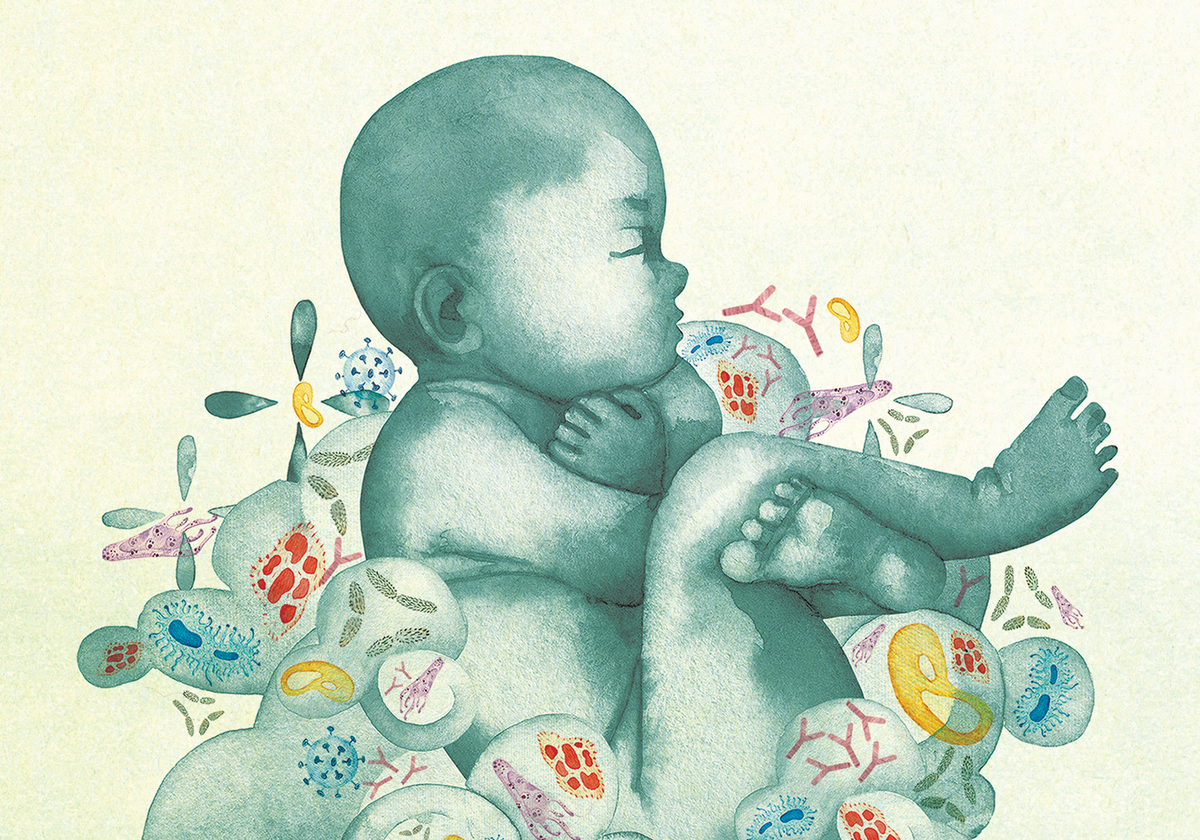
A Critical Look at the New BABY-Biome and PAEDIATRIC-Biome Tests
A microbiome-first, first-do-no-harm perspective
When I first saw the announcement for the new NutriPath BABY-Biome and PAEDIATRIC-Biometests land in my inbox, I was genuinely excited.
Many of us working in microbiome-focused practice have been waiting for better tools to help us understand the developing gut ecosystem in infants and children. We know the early microbiome plays a profound role in immune education, metabolic programming and long-term health. So the idea of a microbiome test designed specifically for babies and children sounded incredibly promising.
But after sitting down with the sample reports and really going through them carefully, that excitement shifted pretty quickly into concern. These concerns are not mine alone, many experienced clinicians working in paediatric microbiome care are raising similar questions.
Not because paediatric microbiome testing is inherently a bad idea, far from it.
But because the infant microbiome is one of the most dynamic ecosystems in the human body, and the way we frame results can very easily push practitioners and parents toward intervention when what the ecosystem often needs most is simply support and time.
And when we are talking about babies, that distinction matters a lot.
The Story That Keeps Me Grounded in Infant Microbiome Work
One of the most important lessons I’ve ever heard about the infant microbiome didn’t come from a journal article.
It came from a story told by one of my mentors, the wonderful Dawn Whitten.
If you’ve never heard Dawn speak about infant microbiomes, you absolutely should. She has an incredible depth of knowledge in this space. I recently saw she’s released new training on infant microbiomes and I suspect it will cover this area beautifully.
Years ago she shared a case of a mum who came to her after having microbiome testing done on her baby, the test was done very early, around 5 weeks of age from memory.
The results showed a very high abundance of Klebsiella (over 40%!) and understandably the mum was really worried.
Rather than jumping straight into treatment, Dawn recommended they pause and retest.
Just a few weeks later, the repeat test told a completely different story.
Bifidobacteria had expanded and were now dominating the ecosystem, and Klebsiella had dropped right down, all without any intervention whatsoever.
The only constant?
A breastfed infant.
Time.
And a microbiome doing exactly what it’s designed to do.
That story has stayed with me because it highlights something we need to keep front of mind when working with infants:
By the time you receive a microbiome result in a young baby, the ecosystem may already have shifted.
And sometimes what looks like a problem is simply a snapshot of a rapidly evolving system and not something that needs to be fixed.
This is where I think we need to be especially careful, because testing in this age group doesn’t just risk over-treatment it also has the potential to create significant and unnecessary stress for parents, particularly mothers who are already navigating an intense and often vulnerable period.
A report that flags “imbalances”, “pathogens” or “overgrowth” in a tiny, developing ecosystem can quickly lead to anxiety and a feeling that something is wrong, when in many cases, the microbiome is simply doing exactly what it is designed to do.
As clinicians, we need to be very careful not to medicalise normal microbiome development, especially in a population where both the biology and the parents are so sensitive to how we frame these results.
Why the Infant Microbiome Is So Easy to Misinterpret
The gut microbiome during infancy is not a miniature version of an adult microbiome.
It is an ecosystem in development.
Immediately after birth, microbial communities are relatively simple and unstable. Early colonisation is often dominated by facultative organisms, particularly members of the Proteobacteria phylum such as Enterobacteriaceae.
As oxygen levels drop within the gut and feeding patterns establish, the ecosystem shifts. In breastfed infants, Bifidobacterium species frequently become dominant, fuelled by human milk oligosaccharides present in breast milk.
Later, as solids are introduced, microbial diversity increases and Bacteroides and other adult-associated anaerobes begin expanding.
This process of ecological succession continues for several years, with the microbiome gradually transitioning toward a more adult-like ecosystem around three to five years of age.
During this time it is also very common to see organisms often described as pathobionts, microbes such as E. coli, Klebsiella and other facultative organisms that can behave as opportunists in certain contexts but are also part of normal early colonisation patterns.
In other words, the infant microbiome can sometimes look messy, but messy does not mean broken. Often it simply means it’s developing exactly as it should.
What These New Tests Get Right
To be fair, there are some positive aspects to these tests.
The use of shotgun metagenomic sequencing is a technically strong approach and allows broader detection of microbes compared with older 16S-based stool tests.
The tests also attempt to provide paediatric-specific reference ranges, which is an important step forward. Historically many stool microbiome reports relied on adult reference data, which is clearly not appropriate when interpreting infant microbiomes.
So the intention behind these tests, creating tools specifically for the developing microbiome, is a good one. However, good intentions alone don’t guarantee safe interpretation, and this is where a few important challenges emerge.
The Age Grouping Problem
One of the first things that stood out to me is the age grouping.
The BABY-Biome test covers 0–3 years, and the PAEDIATRIC-Biome test covers 3–17 years.
From a laboratory perspective this probably makes sense.
But from a microbiome ecology perspective, these are enormous developmental windows.
A newborn, a four-month-old exclusively breastfed infant, a twelve-month-old starting solids and a two-year-old toddler all have very different microbiome profiles.
Even within the first year of life the microbiome can shift dramatically in just a few weeks.
So while the report states that paediatric reference ranges are used, grouping such wide age ranges together inevitably limits how precisely results can be interpreted.
Functional Markers in Babies
The report also includes markers such as:
Faecal calprotectin
Zonulin
Secretory IgA
Faecal pH
These markers can certainly be useful in some clinical situations. But in infants they are naturally variable and often physiologically elevated.
For example, faecal calprotectin levels are well known to be significantly higher in healthy infants than in older children or adults. In the sample report the reference interval is listed as <100 µg/g, which is the commonly used adult cutoff. However, infants and young children naturally have significantly higher calprotectin levels than adults, with concentrations often several-fold higher during the first year of life before gradually declining over early childhood.
Studies consistently show that age-specific reference ranges are required when interpreting calprotectin in paediatric populations, as applying adult thresholds can be misleading. In practice, this means calprotectin values that appear “elevated” using adult cut-offs may actually be physiologically normal in infants, and results should always be interpreted within a developmental context rather than in isolation.
Similarly, gut barrier markers like zonulin are still being researched in paediatric populations and do not yet have clearly established clinical ranges for routine use in infants.
Without strong paediatric context, these markers can unintentionally create a story of gut pathology where none may exist.
Parasites, Commensals and Unnecessary Treatment
The test also screens for organisms such as Blastocystis hominis and Dientamoeba fragilis.
Both of these organisms are commonly detected in healthy individuals and are increasingly recognised as commensal members of the gut ecosystem in many populations, including children.
Detection alone does not necessarily indicate disease.
But when these organisms appear in reports under headings like “parasites”, it can easily trigger treatment decisions - sometimes involving antimicrobial therapies that may disrupt the developing microbiome unnecessarily.
Candida and the Infant Mycobiome
The report also includes Candida species. Fungi are part of the gut ecosystem, but the infant mycobiome is still an emerging area of research and appears to be highly dynamic in early life.
Candida species are frequently detected in healthy infants and may reflect transient colonisation from environmental exposure, breastfeeding or antibiotic use rather than true fungal overgrowth.
Again, interpretation requires context. Without it, fungal findings can easily lead to unnecessary antifungal interventions.
The Microbial Group That Really Matters in Infancy
If there is one group of microbes that truly deserves attention in early life, it is our hero - Bifidobacterium.
In breastfed infants, bifidobacteria capable of metabolising human milk oligosaccharides often dominate the gut ecosystem.
These organisms produce metabolites such as acetate that help shape the microbiome environment, support gut barrier function and reduce pathogen colonisation.
They are not just passengers, they are architects of the infant gut ecosystem. Any microbiome test aimed at infants should ideally give strong insight into these organisms and their ecological role.
The Most Important Clinical Principle
The biggest risk with microbiome testing in infants and children is over-interpretation. When we see microbes labelled as pathogens or opportunists, it can trigger a reflex to “fix” the microbiome, but we must remember that in early life the microbiome is still assembling. Microbes appear, disappear and rebalance as part of normal ecological development.
That’s why a microbiome-first approach should always prioritise:
Supporting breastfeeding where possible
Nourishing the microbiome through diet
Protecting beneficial microbes like bifidobacteria
Avoiding unnecessary antimicrobial disruption
Allowing time for the ecosystem to mature
Because so often, the microbiome doesn’t need to be corrected.
It just needs to be supported while it grows.
Conclusion
Paediatric microbiome testing is an exciting and evolving field. Tests like BABY-Biome and PAEDIATRIC-Biome represent an attempt to better understand the developing gut ecosystem in infants and children. But they also remind us of something incredibly important.
In babies and young children, the microbiome is not a finished ecosystem. It is a living system in development.
And our role as clinicians is not to micromanage that process, but to protect it.
Wondering What Your Child's Gut Health Actually Needs?
Whether you're a new parent, expecting, or someone who cares for children - navigating gut health in early life can feel overwhelming, especially when test results raise more questions than answers.
Chantel works with parents, caregivers, pregnant women and families to take a calm, evidence-based and microbiome-first approach to infant and child health - without unnecessary interventions or alarm.
This is for you if you're a:
New or expecting parent wanting to set your baby up for a healthy start
Grandparent supporting a family through early childhood health questions
Daycare or school staff member noticing patterns in children's gut-related symptoms
Anyone who wants to understand what the science actually says - not just what a report flags (hello fellow praccies!)
Book a consultation with Chantel →Online and in-person appointments available.
References
Dogra S, et al. Microorganisms. 2021.
Galazzo G, et al. Gastroenterology. 2020.
Suárez-Martínez C, et al. Front Microbiol. 2023.
Shao Y, et al. Nat Microbiol. 2024.
Pucci, et al. 2025.
Łoniewska B, et al. J Clin Med. 2020.
Aykur M, et al. Microorganisms. 2024.
Jokelainen P, et al. J Clin Microbiol. 2017.
Bamini GT, et al. Parasite. 2024.
Ward TL, et al. BMC Med. 2017.
Ventin-Holmberg R, et al. J Fungi. 2022.
Santus W, et al. Infect Immun. 2021.