
On-Demand Webinar
☆
The Microbiome Through Life
☆
Instant Access
☆
On-Demand Webinar ☆ The Microbiome Through Life ☆ Instant Access ☆
On-Demand | Watch Anytime | Recording + Slides + Resource | $29
The Midlife Microbiome
Perimenopause, Hormones & Your Gut
The microbiome connection behind hot flushes, histamine, IBS and the symptoms nobody mentions.

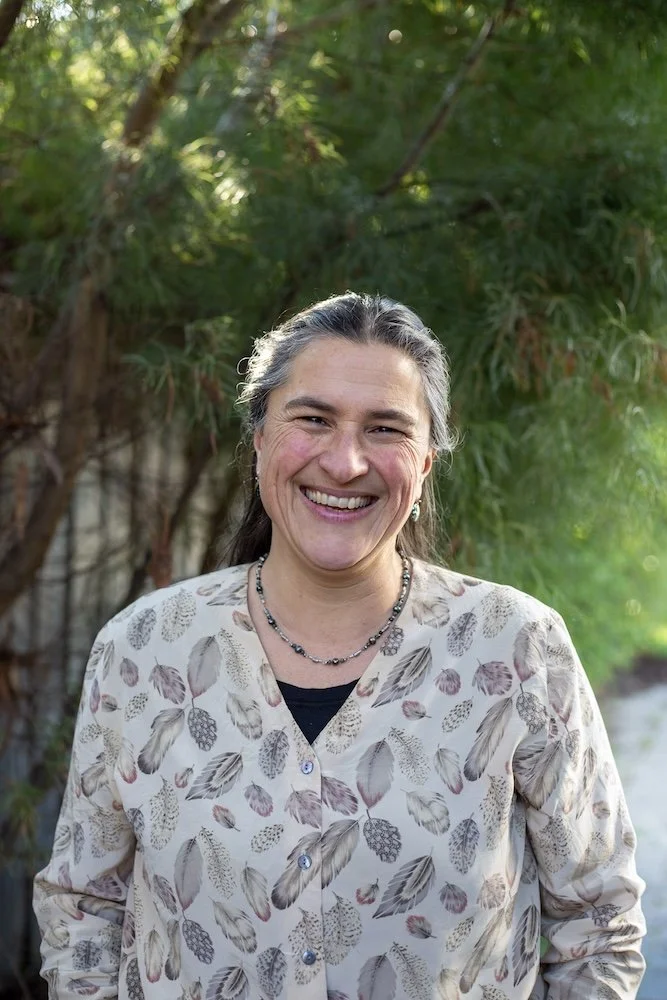

A note from Chantel
It’s a minefield out there.
If you are anything like me you may be finding the perimenopause conversation is pretty extreme. This massive pendulum swings from “EVERYTHING is perimenopause” to “Nah, it’s normal" "time of life stuff” and we should just get on with business as usual.
There are symptoms that get chalked up to stress, to getting older, to ‘just how things are now.’ The IBS that flared from nowhere. The sudden histamine reactions, the sneezing every morning, sensitivities that weren’t there a decade ago. The hot flushes, the 3am wake-ups, the brain fog, the anxiety that arrived without a clear cause.
But then there are the symptoms that don’t get mentioned at all. The genitourinary changes, the vaginal dryness, the urinary symptoms, painful sex, the discomfort that affects daily life and intimacy. Silently carried for years. Not brought up, unless someone specifically asks.
What connects many of these experiences is not just declining oestrogen. It’s what declining oestrogen does to the microbiome. And what the microbiome, in turn, does to hormonal balance, immune regulation, histamine clearance, and brain function.
This is where the research is pointing. And it is a conversation that is long overdue.
This is personal for me.
I turned 50 last year. My own perimenopause transition has been, for the most part, manageable. But there have been things I would not have connected to the transition had I not been working in this space.
The histamine was the most striking. I had never had allergies. Then, suddenly, every morning: sneezing, congestion, a body behaving like it had developed an entirely new sensitivity overnight. It wasn’t until I traced the link between oestrogen decline, mast cell activity, and the gut’s role in histamine clearance that it made sense. It is more common than most women know.
The joint aches that seemed to arrive from nowhere. The genitourinary changes I would have quietly put up with, not realising how straightforward they were to address, and not realising that addressing them mattered beyond comfort.
My story is not the most dramatic one. But it reflects something I hear constantly in clinic. Women living with symptoms they have normalised, disconnected from the transition, and often never thought to mention.
What we actually need is a middle path.
There are two directions the conversation tends to go, and neither is particularly helpful.
The first is over-attribution: everything gets filed under perimenopause, and the differential diagnosis hat comes off.
The second is dismissal: here is something for the anxiety, here is something for the mood, and an assurance that this is simply the stage of life you are in.
This webinar takes neither path.
It is built around the microbiome lens on perimenopause. Not everything is perimenopause. The specific, evidence-based story of what the gut and vaginal microbiome have to do with the symptoms that are showing up, and what thoughtful, well-grounded clinical support can look like.
What’s covered:
This is an evidence-based webinar structured around five core areas:
1️⃣ The oestrobolome
A specialised community of gut bacteria is responsible for metabolising and recirculating oestrogen throughout the body. When this community is disrupted, oestrogen metabolism shifts, and symptoms follow. We look at what the research shows and why this is often a missing piece in the midlife picture.
2️⃣ Histamine, IBS and inflammation in perimenopause
Oestrogen influences mast cell activity and the microbiome’s capacity to clear histamine. Its decline can bring a cascade of symptoms that look nothing like what most women expect from perimenopause: gut flares, allergic reactions, skin changes, heightened reactivity. We trace how the gut drives this, and what can be done.
3️⃣ The vaginal microbiome & the symptoms that don’t get talked about
Oestrogen decline reshapes the vaginal microbiome in significant ways. The clinical consequences range from urinary changes to discomfort that quietly erodes quality of life. These symptoms are common, underreported, and often straightforward to address once they’re on the table.
4️⃣ Evidence-based approaches through the microbiome lens
What actually has clinical support here: phytoestrogens (particularly soy isoflavones) and what the gut microbiome research shows about them; targeted probiotics with evidence in cardiovascular and metabolic health; butyrate production and bone density; dietary and herbal approaches.
5️⃣ For practitioners: holding the clinical picture clearly
As perimenopause finally receives the clinical attention it deserves, there is also a risk of over-attribution. We look at how to apply the microbiome framework while staying rigorous, where the evidence is strong and where it is not, and how to support midlife patients without narrowing the differential.
Who this is for:
This webinar is for you if:
You're navigating perimenopause and finding the conversation frustratingly binary - either everything gets blamed on hormones, or you're told it's "just this stage of life" and sent on your way.
You've developed IBS, gut flares, or histamine reactions (sneezing, congestion, new sensitivities) that seem to have appeared out of nowhere in the last few years.
You're dealing with genitourinary symptoms - vaginal dryness, urinary changes, discomfort during sex - that you've never actually raised with anyone.
You're experiencing hot flushes, 3am wake-ups, brain fog, or anxiety and want to understand what's actually driving it, not just how to sedate it.
You are a GP, naturopath, nutritionist, or allied health practitioner wanting a clearer clinical framework for perimenopausal patients beyond "check hormones, prescribe HRT or antidepressant, move on".
You want to understand the oestrogen–microbiome connection beyond what you've heard before.
No prior microbiome knowledge needed.
Evidence-based, practical, and yours to keep.
What you’ll leave with:
A clear understanding of the oestrobolome - how gut bacteria metabolise and recirculate oestrogen, and what happens when that process is disrupted.
A framework for understanding the link between oestrogen decline, histamine clearance, and the IBS, allergic-type reactivity, and inflammation many women experience in perimenopause.
Insight into the vaginal microbiome shifts behind genitourinary symptoms that are common, underreported, and often straightforward to address.
Clarity on what's actually evidence-based here - phytoestrogens, targeted probiotics, butyrate and bone density, dietary and herbal approaches - and what isn't.
A grounded way to hold the clinical picture: applying the microbiome lens without over-attributing every midlife symptom to perimenopause.
Phytoestrogens & Perimenopause: What Your Gut Has to Do With It: a practical guide including Dr Jason Hawrelak's equol-producing soy yoghurt recipe (PDF)
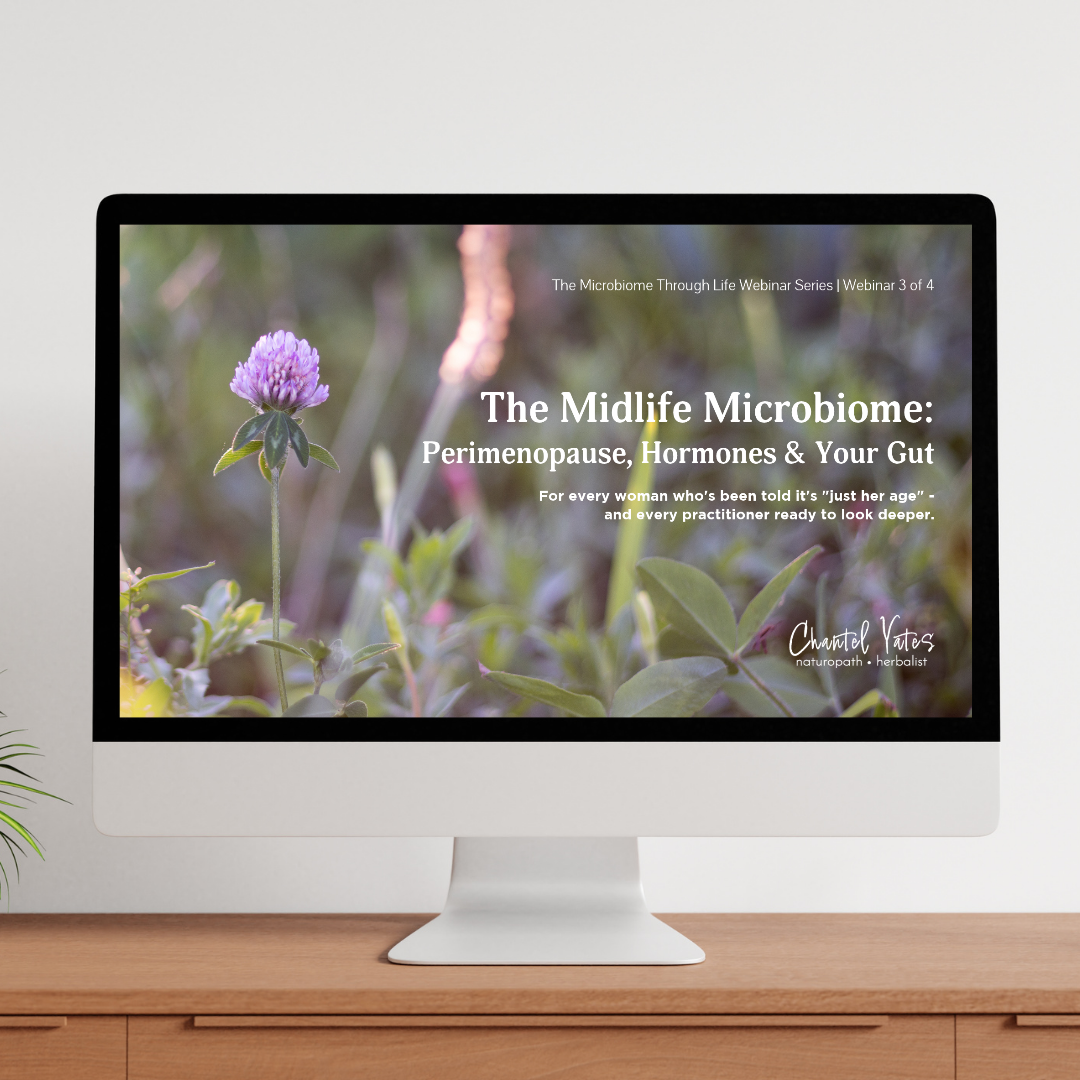
An evidence-based on-demand webinar on perimenopause and the gut, with naturopath and herbalist Chantel Yates.
For every woman who's been told it's "just her age", and every practitioner ready to look deeper. This webinar takes a middle path: taking the biology seriously without over-claiming what the evidence shows. Chantel explains why perimenopause isn't linear, why histamine and IBS can flare, and the vaginal microbiome changes and genitourinary symptoms that rarely get talked about.
She introduces the oestrobolome (the gut bacteria that help recycle oestrogen) and covers what actually works: testing, prebiotics, phytoestrogens and equol, and where menopause hormone therapy (MHT) fits. Practitioners get a framework for holding the differential without over-attributing every symptom to hormones.
For anyone navigating perimenopause, and the practitioners who support them. No prior microbiome knowledge needed.
What's included:
Full webinar recording (lifetime access)
Presentation slides (PDF)
Phytoestrogens & Perimenopause: What Your Gut Has to Do With It: a practical guide covering phytoestrogen food sources, the truth about soy, the equol story, and Dr Jason Hawrelak's equol-producing soy yoghurt recipe (PDF)
Watch at your own pace, revisit anytime
How you'll receive it: Straight after purchase, you'll receive an email with your zip file download. It contains your replay link, slides & resource.
Educational content only. Nothing in this webinar constitutes personal clinical advice. For personal use only.
For more information, visit the dedicated webinar page for this product here.
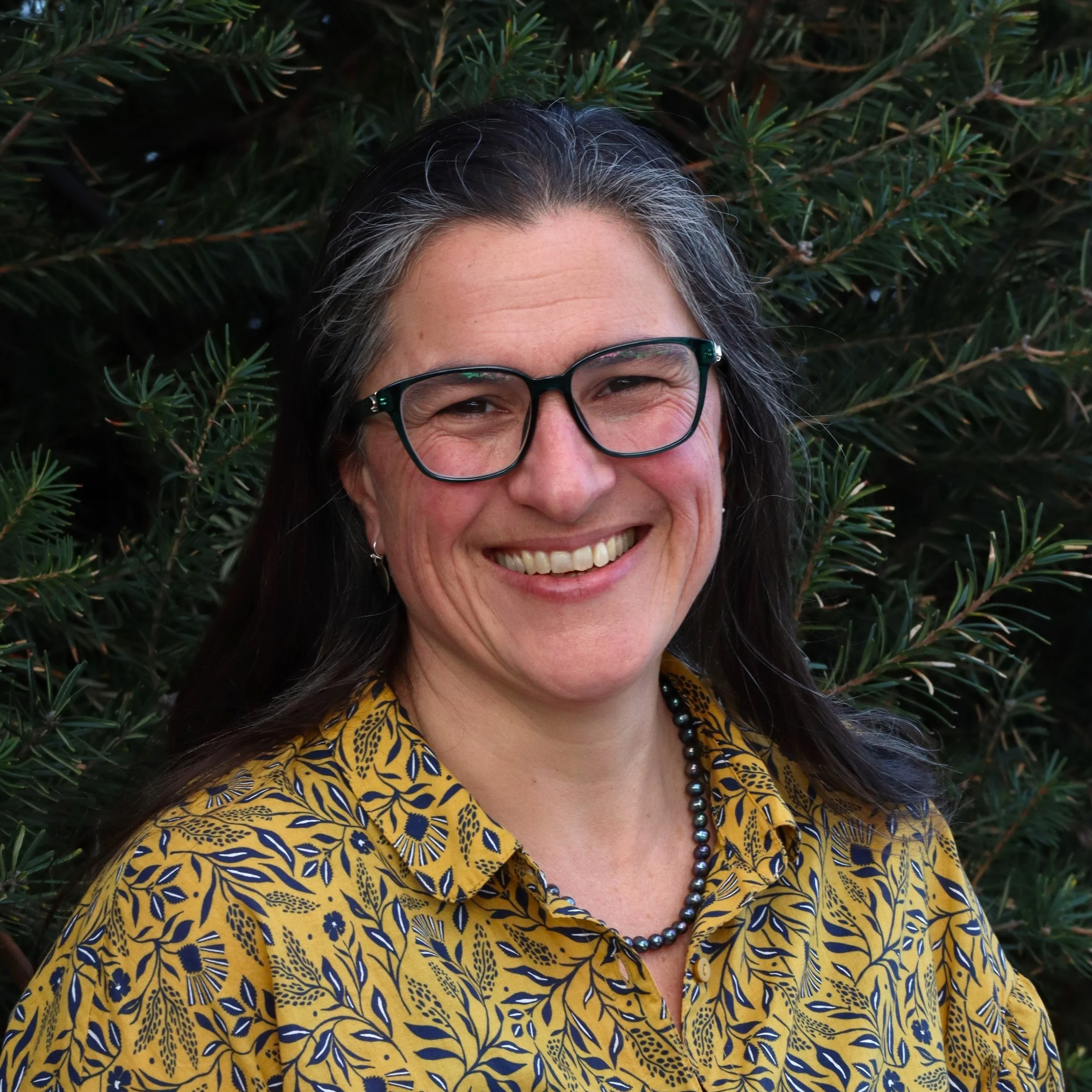
Meet Your Host, Chantel Yates
Chantel Yates is a naturopath, herbalist, and microbiome specialist based in Taroona, Tasmania (muwinina land).
She works with patients and practitioners across Australia and internationally, with a particular focus on complex gut cases, lifestyle medicine, and the microbiome across the life cycle.
Chantel is the founder of the Microbiome Mentorship Series, a case-led clinical education programme for practitioners, and created The Microbiome Through Life webinar series to bring evidence-based gut health education to the broader community.
She brings to this work over a decade of clinical microbiome specialisation, alongside her own experience navigating perimenopause with the particular kind of curiosity that makes things click into place.
Click here to see more on her Qualifications and Career Highlights.
All four recordings (lifetime access)
☆
All four slide decks
☆
Three practical resources
☆
All four recordings (lifetime access) ☆ All four slide decks ☆ Three practical resources ☆
Get the complete series!
The Microbiome Through Life: all 4 for the price of 3!
From the first 1000 days to the ageing gut, Chantel's four-part series follows the microbiome through every life stage.
Get all four on-demand webinars, every slide deck and all three resources for $87, and save $29.
How Your Baby's Microbiome Begins and Why It Shapes Everything
The Childhood Microbiome: Growing Up, Gut Health and the ADHD-Autism Connection
The Midlife Microbiome: Perimenopause, Hormones & Your Gut
The Ageing Microbiome: What Happens to Your Gut as You Age & How to Care for It
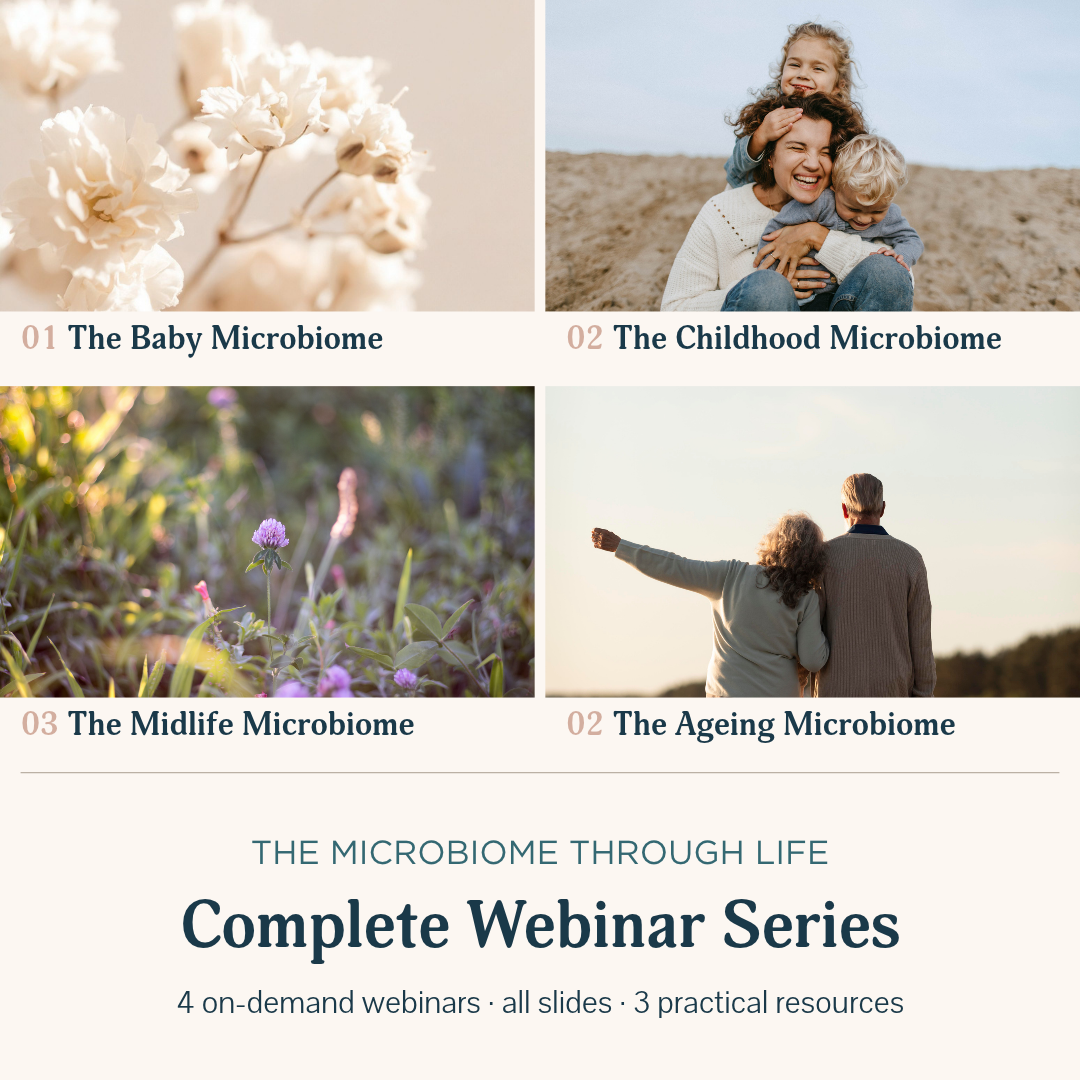
All four webinars in Chantel Yates' Microbiome Through Life series, plus every slide deck and resource, for $87. That's all four for the price of three.
The gut is the gateway, and its influence runs from our very first days right through to how we age. Across four evidence-based webinars, naturopath and herbalist Chantel Yates follows the microbiome through every life stage: how it's seeded, what disrupts it, and the restorative approach she uses in clinic. Every webinar includes a clinical case study.
How Your Baby's Microbiome Begins and Why It Shapes Everything: the first 1000 days, how the microbiome is seeded, and the evidence on C-sections, antibiotics and infant formula.
The Childhood Microbiome: Growing Up, Gut Health and the ADHD-Autism Connection: DGBI in children and adolescents, and the gut-brain evidence in ADHD, autism and AuDHD.
The Midlife Microbiome: Perimenopause, Hormones & Your Gut: the oestrobolome, histamine and IBS, the vaginal microbiome, and what actually works.
The Ageing Microbiome: What Happens to Your Gut as You Age & How to Care for It: inflammageing, the gut-brain research, and practical care for the ageing gut.
For patients, parents, carers and practitioners. No prior microbiome knowledge needed.
What's included:
All four full webinar recordings (lifetime access)
All four presentation slide decks (PDF)
Supporting the Child & Adolescent Microbiome (PDF)
Phytoestrogens & Perimenopause: What Your Gut Has to Do With It (PDF)
Caring For The Ageing Microbiome: Protecting & Restoring The Gut As We Age (PDF)
Watch at your own pace, revisit anytime
How you'll receive it: Straight after purchase, you'll receive an email with your zip folder download. It contains all four replay links, slides and resources.
Educational content only. Nothing in these webinars constitutes personal clinical advice. For personal use only.
FAQS
-
Not at all. Each webinar is designed to be accessible whether you're completely new to this topic or already have some background. Everything is explained in clear, evidence-based language that's equally useful for patients, parents, and practitioners.
-
You'll have lifetime access. Watch at your own pace and come back to it whenever you need.
-
No. This is a genuine educational session built around evidence-based content you can use straight away. Chantel mentions ways to work with her further, but the focus is entirely on giving you useful knowledge.
-
Yes. Each webinar is designed to bridge both audiences. The content is clinically grounded and evidence-rich, and practitioners are very welcome - both to attend for their own learning and to share with patients in their care.
-
No. This webinar is educational and nothing in it constitutes personal clinical advice. If you'd like individual support, you can book a 1:1 consultation with Chantel here.
-
This is a recorded session, so there's no live Q&A. You're welcome to email hello@chantelyates.com.au, or book a consultation for personalised support.
-
This webinar is for your personal use only. If you know someone who'd benefit, they're welcome to purchase their own copy.
-
Yes. The Microbiome Through Life complete series includes all four webinars, every slide deck and all three resources for $87. That's all four for the price of three.
-
As this is a digital product, we're unable to offer refunds once your download has been delivered.
An evidence-based on-demand webinar on perimenopause and the gut, with naturopath and herbalist Chantel Yates.
For every woman who's been told it's "just her age", and every practitioner ready to look deeper. This webinar takes a middle path: taking the biology seriously without over-claiming what the evidence shows. Chantel explains why perimenopause isn't linear, why histamine and IBS can flare, and the vaginal microbiome changes and genitourinary symptoms that rarely get talked about.
She introduces the oestrobolome (the gut bacteria that help recycle oestrogen) and covers what actually works: testing, prebiotics, phytoestrogens and equol, and where menopause hormone therapy (MHT) fits. Practitioners get a framework for holding the differential without over-attributing every symptom to hormones.
For anyone navigating perimenopause, and the practitioners who support them. No prior microbiome knowledge needed.
What's included:
Full webinar recording (lifetime access)
Presentation slides (PDF)
Phytoestrogens & Perimenopause: What Your Gut Has to Do With It: a practical guide covering phytoestrogen food sources, the truth about soy, the equol story, and Dr Jason Hawrelak's equol-producing soy yoghurt recipe (PDF)
Watch at your own pace, revisit anytime
How you'll receive it: Straight after purchase, you'll receive an email with your zip file download. It contains your replay link, slides & resource.
Educational content only. Nothing in this webinar constitutes personal clinical advice. For personal use only.
For more information, visit the dedicated webinar page for this product here.